
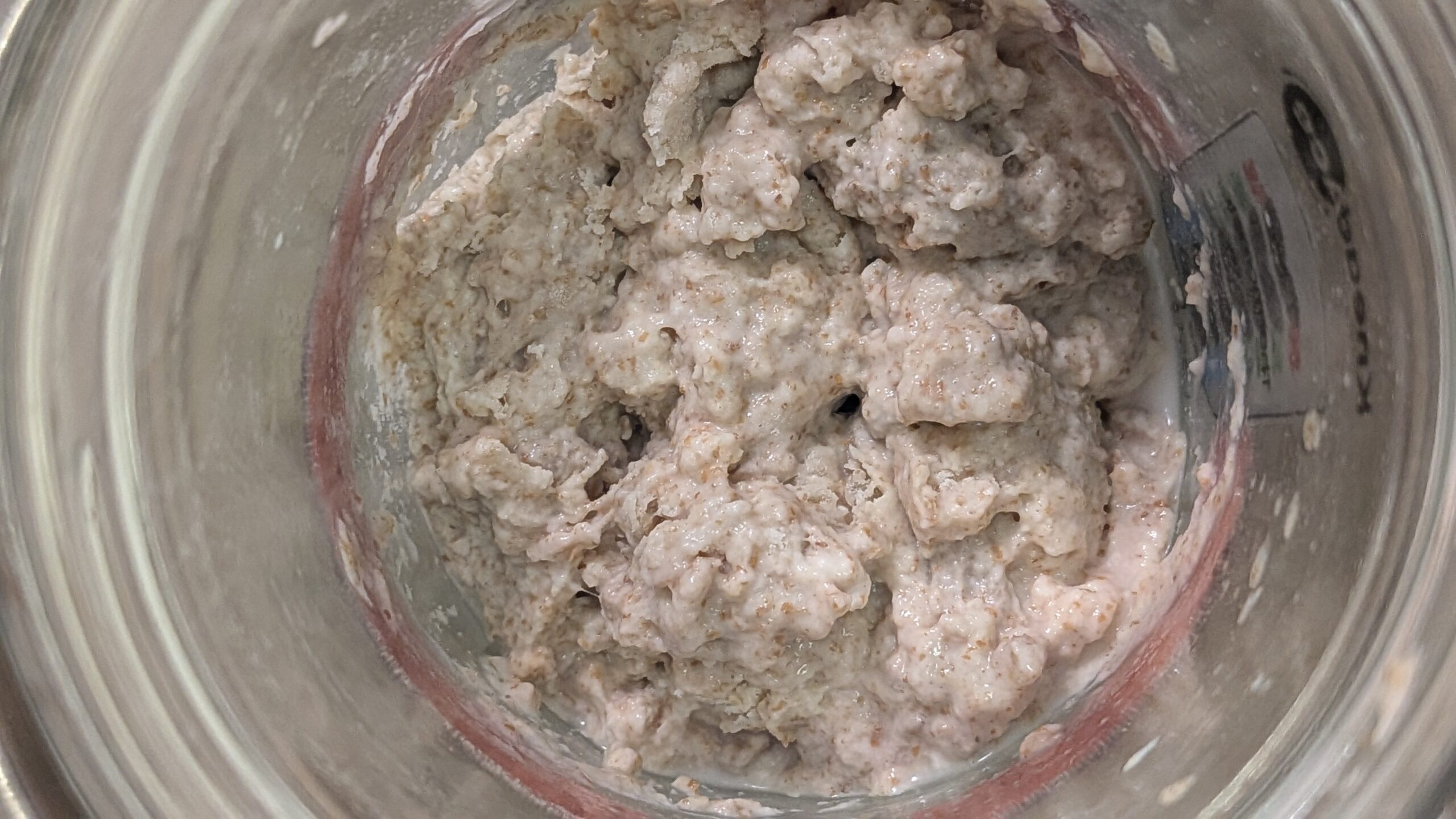
Is it about 24 hours since you made your starter? Did you come up with a name yet? I’m leaning towards FernanDough. If both these things are true, you’re ready to start your first feeding.
If you’re lucky, your starter will have done something over the last day. That could be a few bubbles forming on top, a slight sweet, but acidic, smell, or even a massive overflow of your starter all over the counter! That last one isn’t likely after one day – but very well could happen tonight (I store my jar in a bowl for the first few days just in case). Either way, now starts a few steps that you’ll do over and over again:
- Discard half your current starter;
- Add 100g of AP flour;
- Add 100g of room temperature water; and
- Stir!
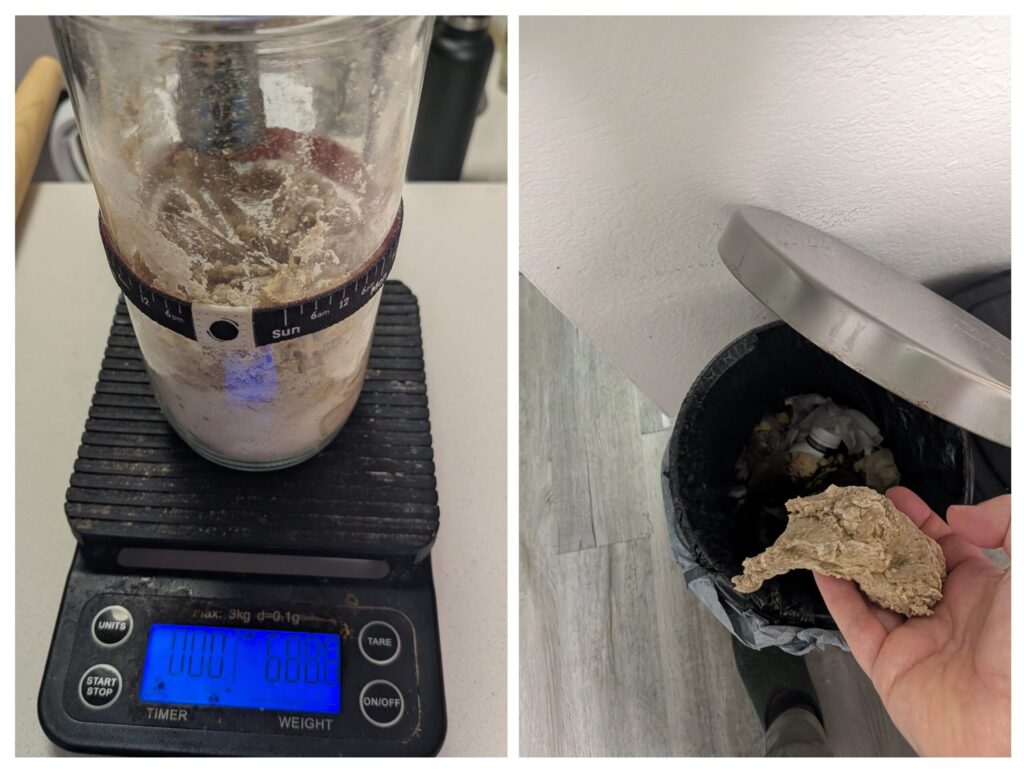
Start by discarding about half of your existing starter. This keeps your starter manageable and prevents it from growing too large. This is where it helps to know how much your jar weighs. My jar weighs about 400g and there are 688g of starter in it – so I threw away about 150g. This is sad and at the moment, there’s not much you can do about it. After you’ve established your starter, there are tons of fun things you can do with your discard aside from throwing it away.
Next, you’ll want to clean the inside of your jar a little bit. This isn’t super important, but sourdough starter (especially the very stiff one we’re making) is one of the world’s stickiest substances and you’ll want to make sure a crust doesn’t form on your jar. To do this, just take a damp paper towel or rag and rub it against the inside of the starter. If you do this regularly, you won’t have to switch jars all the time or have to throw your jar away because it gets too gross (don’t ask me how I know).
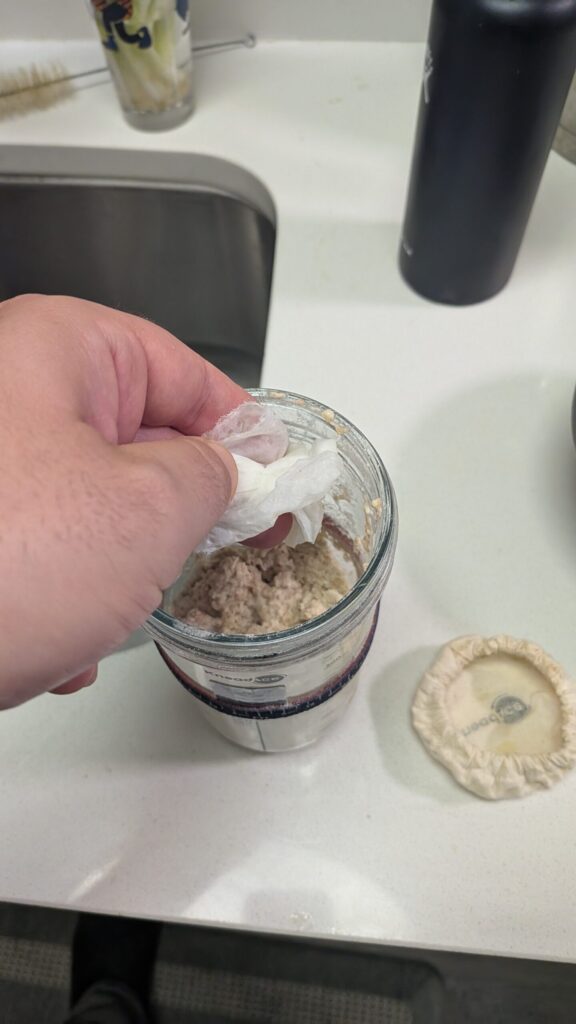
When the jar is relatively clean, add 100g of water. Again, use distilled if your water smells like chlorine. You won’t have to do this forever, just for the initial feedings. Mix this with your remaining starter and try to get any previously undissolved flour off the sides of the wall of the jar and dissolved into the starter mixture.
Finally, add 100g of AP flour (or a 50/50 mix of AP and wheat if you’d like) and mix everything together! Like yesterday, put a rubber band over the top of the starter, put it in a spot outside of direct sunlight, and let it sit there. You can leave it uncovered again, or put something like a cheesecloth over the top of the jar.
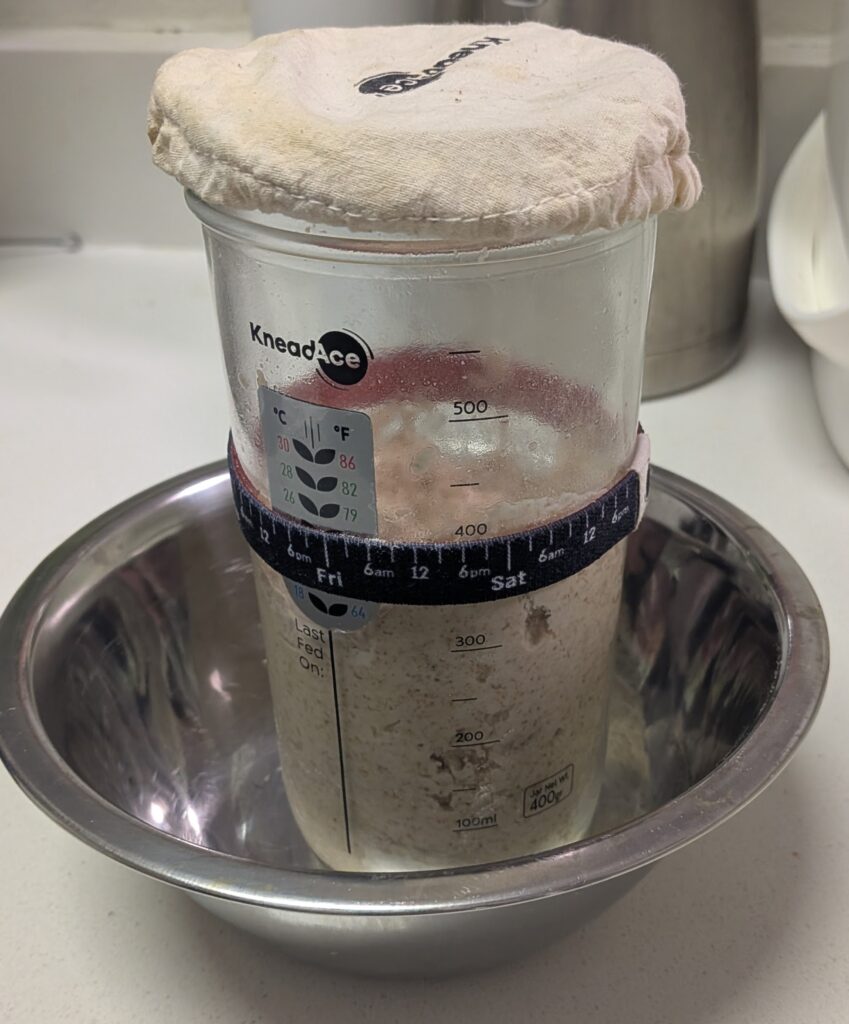
That’s it for now! We’ll do something like this for a few days (or, if you’re unlucky, more than a few) until the starter starts to rise and fall regularly.
Leave a Reply